2026-08-17 · Mark Ellison
How Dallas Clay Soils Affect Foundations During Dry Spells
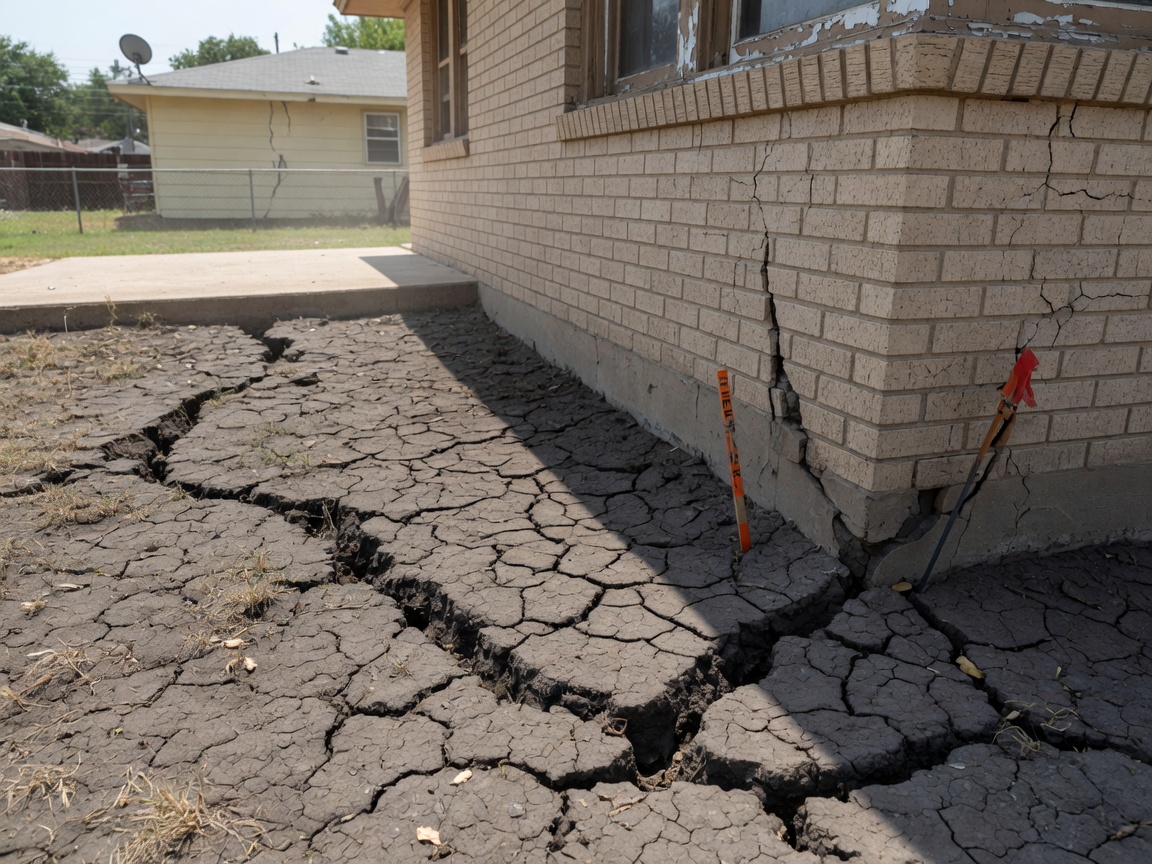
Dallas clay soils shrink 15-25% in volume when moisture levels fall during dry spells, allowing foundations to settle ½ to 1½ inches in a single season. This movement occurs because the expansive clays that dominate the region lose water rapidly under hot summer temperatures, creating gaps beneath slabs and footings. The humid subtropical climate with hot summers and mild winters accelerates the cycle, as brief rains rarely penetrate deep enough to rehydrate the soil fully before the next dry stretch begins.
How Dallas Clay Soils React to Low Moisture
Dallas sits on montmorillonite-rich clays that expand when wet and contract when dry. During periods with less than 1 inch of rain per month, these soils can lose enough water to drop surface levels by 2-4 inches across a typical residential lot. The effect is strongest in North Dallas and East Dallas where older homes rest on shallow footings that sit directly in the active clay zone. Settlement often appears first along the south and west sides of a house because those exposures receive the most direct sun and heat. Over multiple seasons the repeated shrink-swell action fatigues concrete, producing hairline cracks that widen to ⅛ inch or more. Homeowners notice doors that begin to rub and floors that slope toward the center of the structure.
Observable Effects on Local Foundations
Foundation movement in Dallas during dry spells shows up as stair-step cracks in brick veneer, separation between the slab and exterior grade beams, and gaps around plumbing penetrations. In Uptown Dallas and Oak Lawn, where many homes sit on pier-and-beam systems, the piers can lose bearing as soil pulls away, causing noticeable bounce in interior floors. Slab-on-grade homes in Deep Ellum and Bishop Arts District experience edge lift reversal, where the perimeter drops while the center remains relatively stable. These patterns differ from movement caused by heavy rain, which is covered in our related article on signs of foundation movement after heavy Texas rainfall. Monitoring crack widths with a marker and ruler every 30 days helps track whether movement is active or dormant.
Soil Monitoring and Site Adjustments
Tracking soil moisture around the foundation perimeter prevents sudden settlement. Install 6-8 inch deep moisture probes at the corners and midpoints of the house; readings below 15% volumetric water content signal the need for supplemental watering. Maintain a 6-8 foot wide zone of moist soil by using soaker hoses set to run 20-30 minutes twice weekly when rainfall totals fall below 0.5 inches. Correct any negative grading that channels water away from the house, a common issue addressed through exterior grading and drainage corrections. In Lake Highlands and Downtown Dallas, mature trees within 15 feet of the foundation can extract 20-30 gallons of water daily, so root barriers or strategic pruning reduce localized drying. These steps keep soil volume stable without over-saturating the ground.
Professional Evaluation in Dallas
When cracks exceed ¼ inch, doors stick on multiple sides, or floors slope more than 1 inch over 10 feet, schedule a foundation inspection with a local technician familiar with Dallas clay behavior. Inspections include laser-level readings at 10-foot intervals and soil borings to 8-10 feet to measure active zone depth. Results guide whether minor adjustments or engineered repairs are appropriate. Texas Foundation Repair Pros serves Dallas and nearby neighborhoods and maintains hours of Mon–Fri 8am–6pm, Sat 9am–2pm for assessments. Early evaluation during a dry spell often limits repair scope compared with waiting until movement compounds.