2026-08-17 · Mark Ellison
Signs of Foundation Movement After Heavy Texas Rainfall
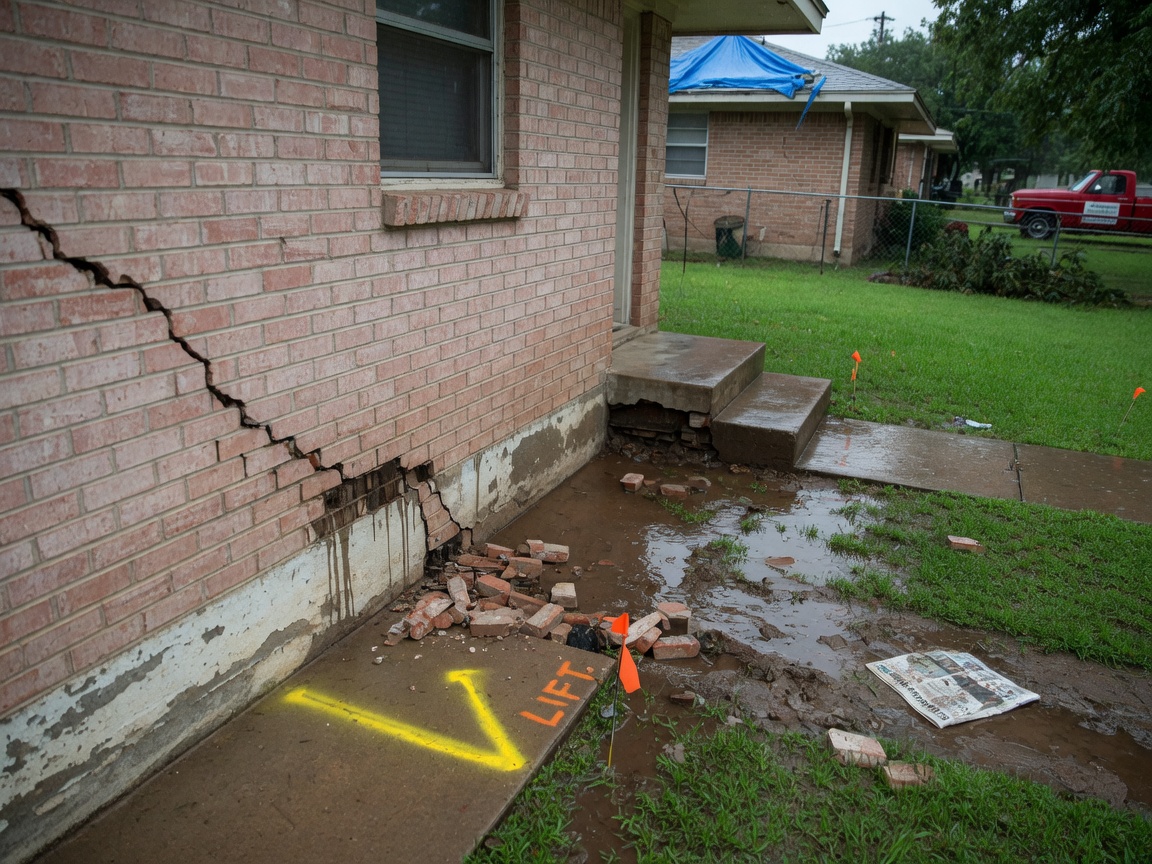
Heavy Texas rainfall often triggers foundation movement in Dallas within 2–6 weeks, especially when 4–8 inches of rain falls in a short period. Homes in areas with clay-rich soils see soil expansion that pushes or pulls slabs and piers, leading to measurable shifts of 1/2 inch or more in severe cases.
How Dallas Rainfall Affects Local Soils and Foundations
Dallas sits in a humid subtropical climate with hot summers and mild winters. Frequent downpours saturate the ground, causing clay soils to swell and exert upward pressure on foundations. Neighborhoods such as East Dallas, Lake Highlands, and North Dallas experience this cycle most often because of their soil composition. Water that pools near slabs for more than 48 hours increases the risk of differential movement. Properties near Klyde Warren Park or the Dallas Arboretum face similar issues when drainage patterns change after storms. Over time, repeated saturation weakens the soil support beneath footings and can create voids that allow slabs to settle unevenly.
Visible Signs That Appear After Prolonged Wet Weather
Cracks wider than 1/4 inch in brick veneer or drywall often form first along window corners and door frames. Doors that begin to stick or rub against jambs indicate the frame has shifted by as little as 1/8 inch. Uneven floors that slope more than 1 inch over 10 feet become noticeable when furniture rocks or water runs toward one side of a room. Gaps between baseboards and flooring or between countertops and walls also signal movement. In Uptown Dallas and Deep Ellum, older homes may show additional exterior signs such as separation at porch attachments or stair-step cracks in masonry that exceed 3/8 inch.
Checking Drainage and Grading Around Your Home
Stand outside after the next rain and note how long water remains within 5 feet of the foundation. Proper grading should direct water away at a minimum 6-inch drop over the first 10 feet. Clogged gutters or downspouts that empty too close to the slab allow moisture to collect against the perimeter. In Bishop Arts District and Oak Lawn, narrow lots sometimes limit natural drainage, making exterior grading corrections essential. Adding or extending downspout extensions by 5–10 feet often reduces saturation enough to slow ongoing movement.
When Movement Requires Professional Evaluation
Schedule a foundation inspection if any single crack exceeds 1/2 inch, multiple doors stick simultaneously, or floor slopes exceed 1.5 inches over 10 feet. Early assessment prevents small issues from requiring larger interventions such as exterior waterproofing. Inspectors measure elevation differences at 20–30 interior points and document changes against previous benchmarks. Homes in Downtown Dallas and Reunion Tower vicinity often benefit from prompt checks because nearby construction can compound rainfall effects.
Next Steps After Identifying Movement
Document dates of heavy rain events and photograph cracks with a ruler for scale. Compare current conditions to photos taken during drier periods to establish a timeline. Review the article How Dallas Clay Soils Affect Foundations During Dry Spells for seasonal context on soil behavior. If repairs are needed, compare options such as wall anchors or carbon fiber straps based on the specific location and severity of movement. Understanding these factors helps homeowners make informed decisions without unnecessary work.